About Us
Centers & Services
Conditions & Treatments
Make an Appointment
Fees & Charges
Patient Information
Find a Doctor
Insurance & Direct Billing
Facilities
Promotions
Health Guides
News & Seminars
Contact Us
Careers
2
EN
繁體
简体
日本語
EN
繁體
简体
日本語
Home
Alert Response Level
View All
Center and Services
Facilities
Conditions & Treatments
Health Assessment
Fees & Charges
Patient Information
Promotions
View More
Customised and Compassionate Care in Chemotherapy
15 Jan 2026
Robotic Assisted Hip Replacement Surgery
6 Jan 2026
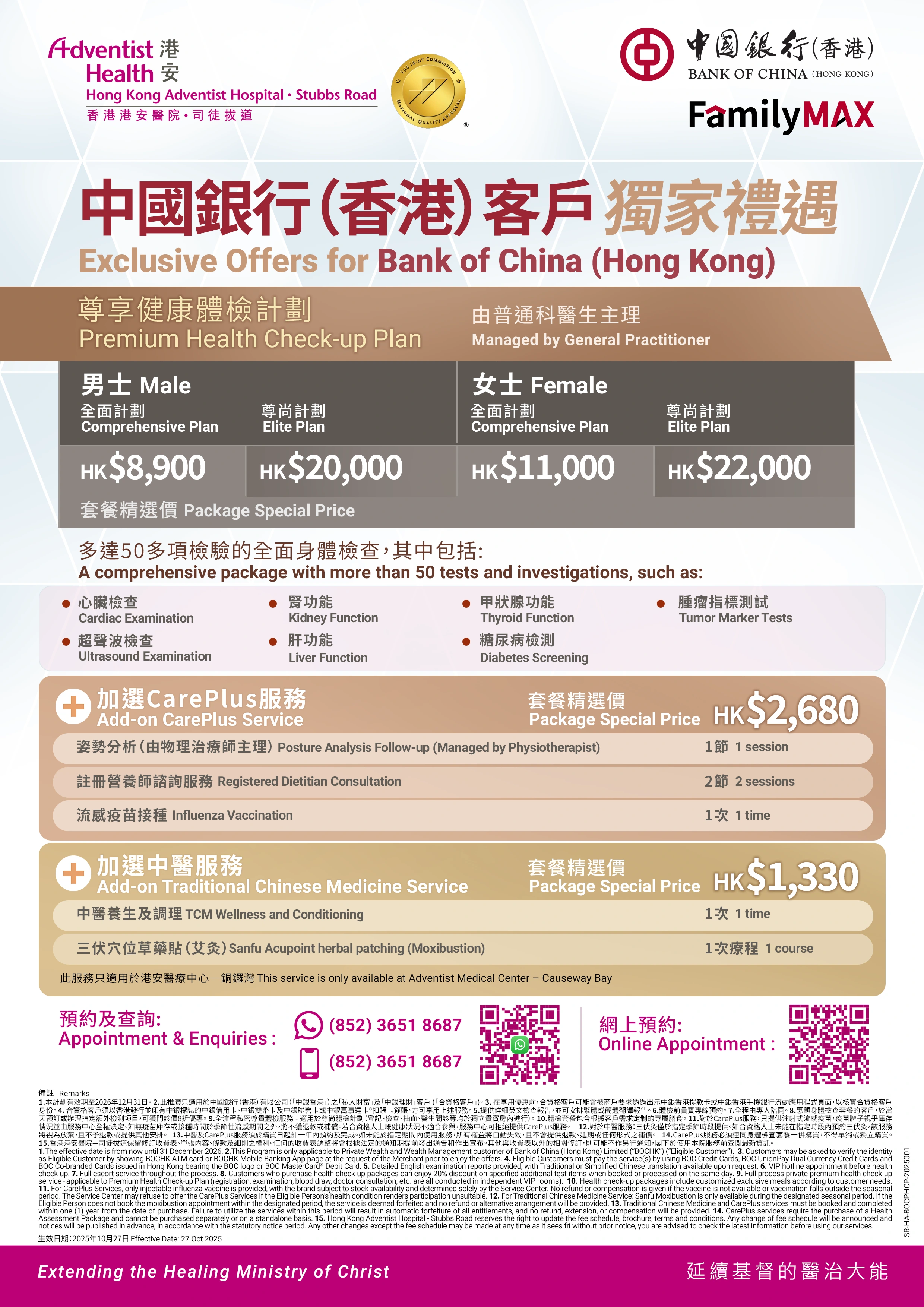
Exclusive Offer for Bank of China (Hong Kong) - Premium Health Check-up Plan
27 Oct 2025
BOCHK
Exclusive Offer for Bank of China (Hong Kong) - Children & Adolescent Health Check-up Plan
27 Oct 2025
BOCHK
Health Guides
View More
New Perspectives on Stroke Rehabilitation: Killing Two Birds with One Stone? Addressing the Dual Challenges of Sleep Apnea and Swallowing Difficulties
Mr. Lai Chung Him
3 Feb 2026
Is the "Silence" of COPD Patients the Most Dangerous? Deconstructing Sensory Function and Mucus Management
Mr. Lai Chung Him
3 Feb 2026
Clinical Swallowing in Stroke Cases: From Screening to Diagnosis
Mr. Lai Chung Him
3 Feb 2026
Introduction to Lu-177 Radionuclide Therapy
3 Feb 2026
Prostate Test Indicators Exceed Normal Range — Doctor Explains the Meaning Behind PSA Levels
Dr. Ma Wai Kit
28 Jan 2026
New Trends in Prostate Cancer Treatment: From Precision Diagnosis to Personalized Treatment Plans
Dr. Ma Wai Kit
22 Jan 2026
Doctor
Book
WhatsApp Booking
Contact
Top
Alert Response Level
Hospital Services During Bad Weather
Close
Close
Outpatient clinic (GPs)
Office Hour: Sunday - Friday (9am - 1pm & 2pm - 6pm)
Waiting Time
Book





.webp)










.webp)